Initializing...
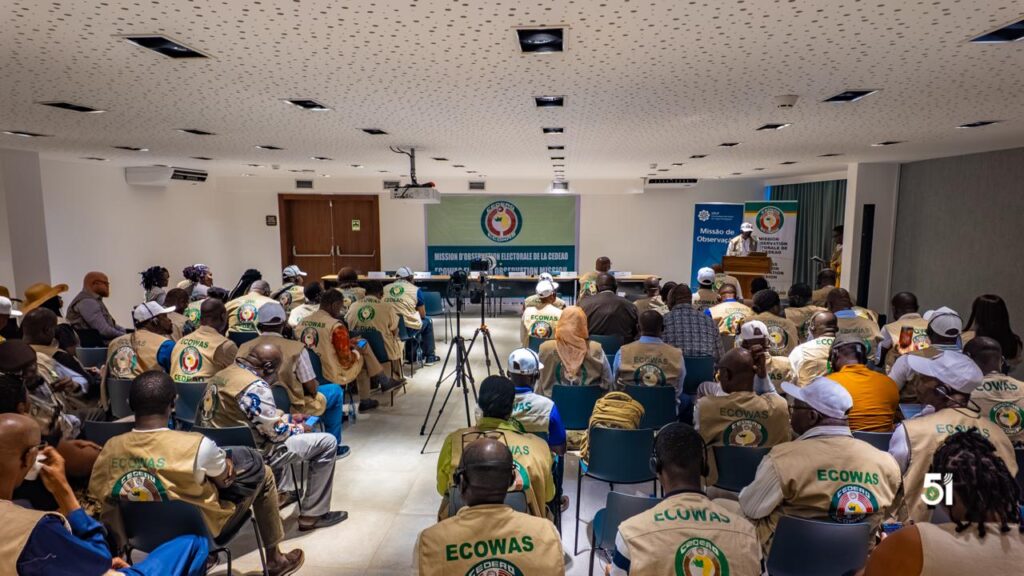
The ECOWAS Election Observation Mission to the Presidential Election in Cabo Verde, led by H.E. Fatoumatta JALLOW-TAMBAJANG, former Vice-President of the Republic of The Gambia, presented its Preliminary Declaration in Praia on 17 November 2026, stating that the election of 15 November was conducted in a peaceful, orderly and transparent manner and complied with the national legal framework and relevant regional and international standards governing democratic elections.
Opening the joint press conference of the international observation missions at the Barceló Hotel, alongside the African Union, the Community of Portuguese-Speaking Countries (CPLP) and the International Organisation of La Francophonie (OIF), the Head of Mission placed the vote in the long arc of Cabo Verde’s democratic journey since 1991, describing the country as “an example for several African countries.” For ECOWAS, she stressed, an election is not merely an exercise in counting votes, but a pathway to democratic consolidation, economic growth and development.
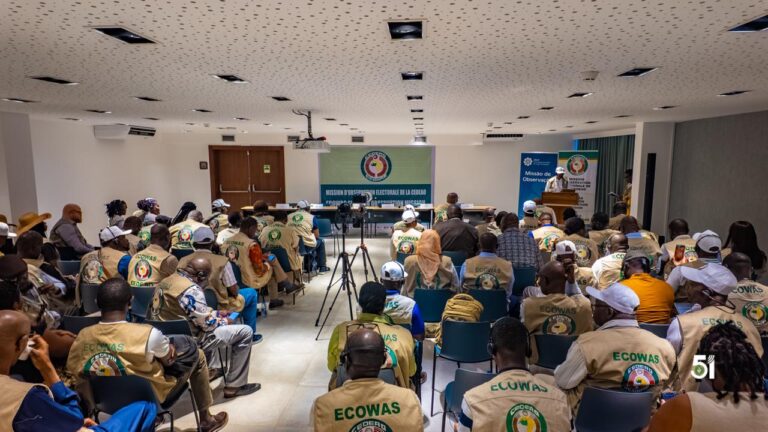
Dispatched by the President of the ECOWAS Commission, H.E. General Birame DIOP, under the 2001 ECOWAS Supplementary Protocol on Democracy and Good Governance, the Mission brought together 92 observers – 19 long-term observers in the field since 3 November and 73 short-term observers drawn from electoral management bodies, Ministries of Foreign Affairs of Member States, the Permanent Representatives’ Committee (PRC), the ECOWAS Parliament, the Community Court of Justice, electoral experts and civil society – organised in 35 teams across all nine inhabited islands.
The Mission was supported by the ECOWAS Commissioner for Political Affairs, Peace and Security, Madam Francess Piagie ALGHALI, who headed the Technical Team, together with the ECOWAS Resident Representative in Cabo Verde, H.E. Ambassador João Ribeiro BUTIAM CO, H.E. Ambassador Kalilou TRAORÉ, representing the ECOWAS Permanent Representatives’ Committee (PRC), the Director of Political Affairs, Dr. Babatunde AFOLABI, and Hon. René Konan KOUMOIN, representing the ECOWAS Parliament.
On Election Day, the Head of Mission observed the opening of polls at the Escola Secundária Abílio Duarte in Palmarejo, Praia, before visiting polling stations in Tira Chapéu, Várzea and Achadinha. Across the country, ECOWAS observers reported that voting took place in a peaceful and orderly atmosphere, that voters cast their ballots swiftly, and that ballot boxes were shown to be empty before being sealed. Women were well represented among both voters and polling officials. Counting began immediately after the close of polls, in the presence of candidate agents, and security arrangements were assessed as appropriate and non-intrusive.
Highlighting good practices, the Mission singled out features that distinguish Cabo Verde’s democracy: the suspension of the functions of an incumbent President seeking re-election during the electoral period; the use of state resources mainly for state functions; the financial autonomy of the National Electoral Commission (CNE), a guarantee of its independence; the harmonious coordination between national institutions; the effectiveness of the Constitutional Court and the separation of powers; as well as a diverse and professional media landscape. It also commended the Braille materials and accessibility arrangements that enabled voters with disabilities to cast their ballots independently.
In its conclusions, the Mission found that the professionalism of the electoral management bodies, polling officials, candidate agents and security personnel “contributed significantly to an electoral environment in which voters could freely and secretly exercise their democratic rights in conditions of safety and confidence,” and paid tribute to the civic responsibility and patriotism of the Cabo Verdean electorate. It noted, however, a relatively lower voter turnout than in the legislative elections of 17 May 2026 – a trend the Head of Mission linked to migration and to the holding of the two elections on separate dates.
RECOMMENDATIONS TO STRENGTHEN DEMOCRATIC GOVERNANCE
Looking ahead, ECOWAS set out targeted recommendations. It encouraged the CNE and the General Directorate for Electoral Process Support (DGAPE) to continue building on Cabo Verde’s positive electoral legacy, and the Constitutional Court to ensure that all electoral complaints and disputes are handled expeditiously and in accordance with the law. It called on the Government and relevant public institutions to uphold institutional neutrality, protect the rights and security of all citizens, expand opportunities for young people in governance and national development, open election observation to civil society organisations across the entire electoral cycle, and honour all international human rights instruments, notably for women and young people.
The Mission further urged the media to work hand in hand with the electoral authorities to promote accurate, balanced and responsible information and to reject misinformation, disinformation, hate speech and incitement, and called on all stakeholders to enhance the participation and representation of women, youth, persons with disabilities and diaspora communities. It recommended that the ECOWAS Commission commend Cabo Verde for the successful conduct of both the legislative elections of 17 May and the presidential election of 15 November 2026, and continue to support post-election dialogue, peacebuilding, national cohesion, inclusive participation and sustainable development.
The Mission expressed its sincere appreciation to the Government and people of Cabo Verde, the CNE, the DGAPE, civil society organisations and the media, and welcomed its close collaboration with the African Union, the CPLP, the ROJAE-CPLP, the ECOWAS Network of Electoral Commissions (ECONEC), the OIF and the United Nations Office for West Africa and the Sahel (UNOWAS) – a partnership the Head of Mission wished to see endure well beyond Cabo Verde.
The former Prime Minister of the Republic of Mozambique, H.E. Aires Bonifácio Baptista ALI, speaking on behalf of the Head of the African Union Mission, H.E. Bornito de Sousa Baltazar DIOGO, former Vice-President of the Republic of Angola, echoed this assessment, describing the peaceful and serene conduct of the election, without serious incidents, as a reflection of the political maturity of Cabo Verdean citizens and political actors.
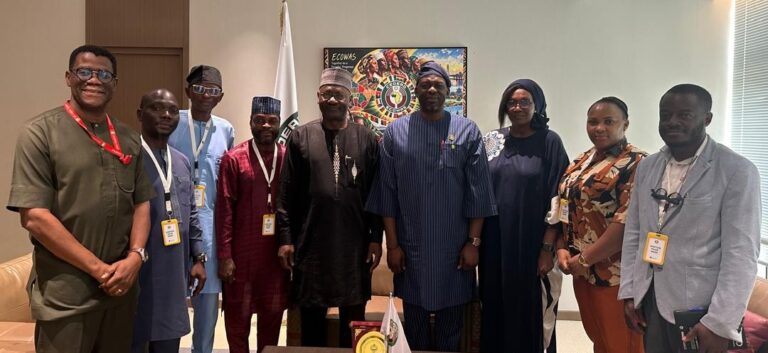
In the days following the vote, the Head of Mission paid a courtesy visit to the Minister of Foreign Affairs, Communities and National Defence, H.E. Manuel Augusto Lima AMANTE DA ROSA, as part of the Mission’s engagement with the national authorities. The ECOWAS delegation also made an informal visit to Cidade Velha, the first capital of Cabo Verde and a UNESCO World Heritage Site, where it was received by the President of the Municipal Council of Ribeira Grande de Santiago, Mr Nelson MOREIRA – a symbolic stop in the cradle of the Cabo Verdean nation and its historic ties with West Africa.
ECOWAS long-term observers will continue to monitor the post-electoral phase until 19 November 2026. The Mission will then finalise its report and share it with the relevant institutions, so that its recommendations may inform future constitutional, legal and electoral reforms.
Through this Mission, ECOWAS reaffirms its commitment to standing alongside Cabo Verde in consolidating its democratic achievements, as well as its determination to promote democracy, good governance, peace and stability in the region.
Discover how ECOWAS is transforming communities, economies and the lives of West African citizens — one story at a time.