Initializing...
The ECOWAS Commission has taken a decisive step towards translating its regional policy commitments on climate-related human mobility into practical action, through the technical review of a draft Management Guidance Handbook supported by German Cooperation (GIZ), the Swiss Agency for Development and Cooperation (SDC) and the International Organization for Migration (IOM), under the European Union-funded Free Movement and Migration in West Africa (FMM West Africa) programme.
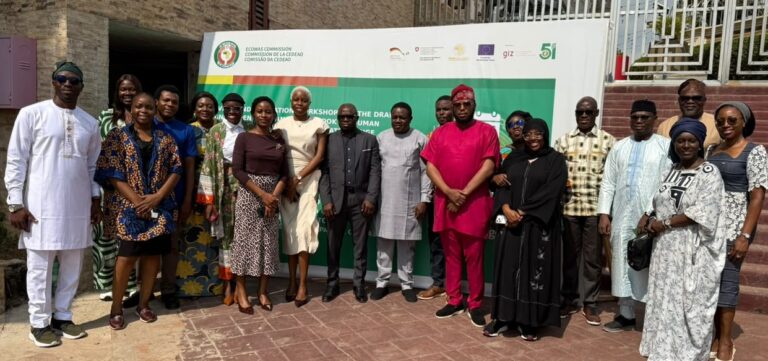
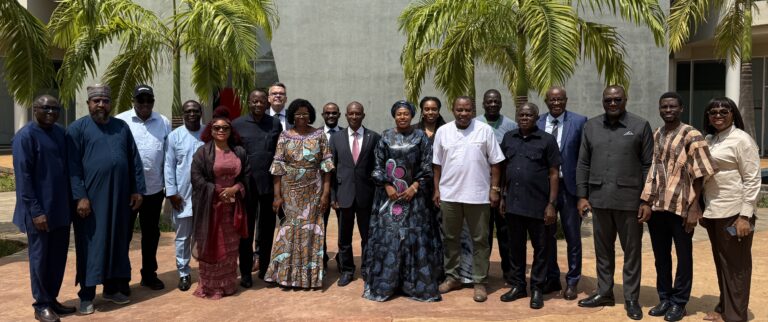
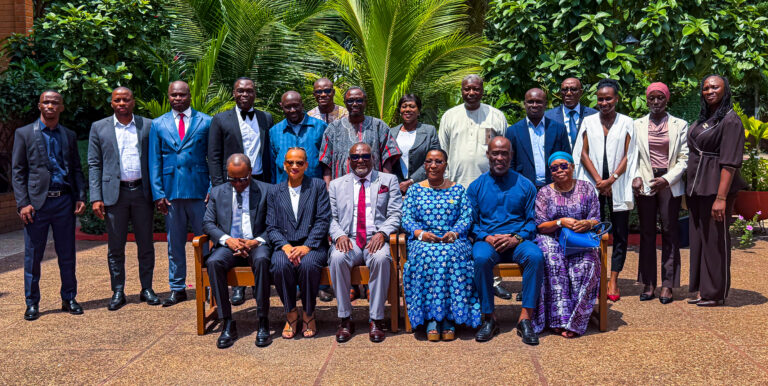
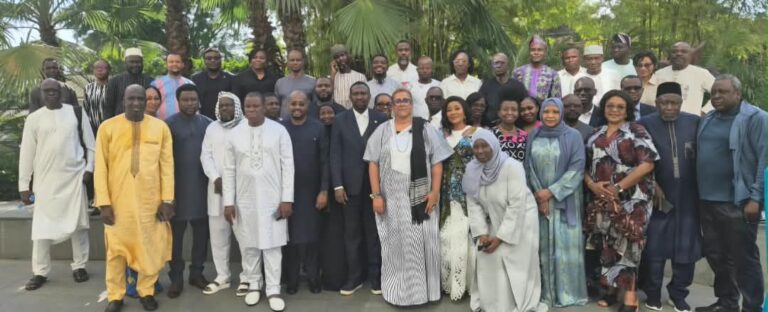
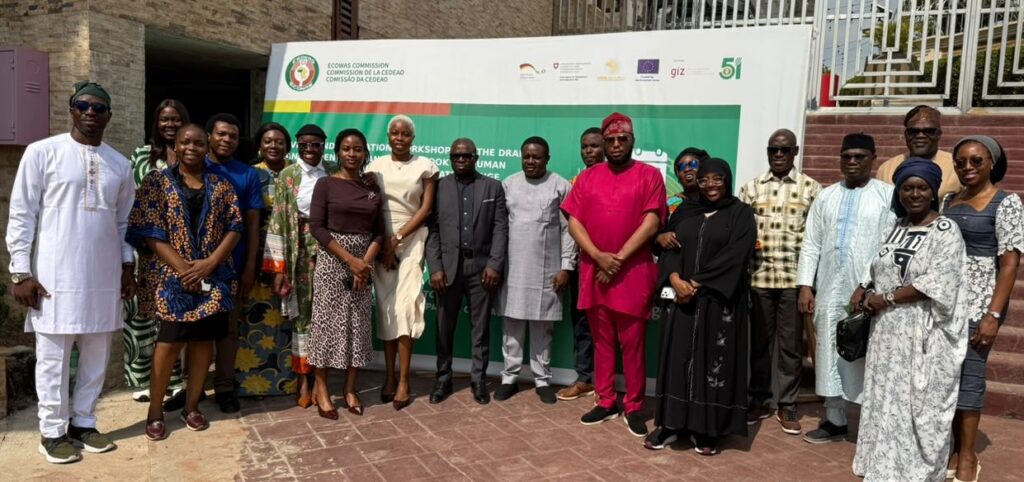
A one-day review and validation workshop, held on 30 October 2026 in Abuja, Nigeria, brought together representatives of the Commission’s directorates and specialised agencies, technical experts and development partners to review the Handbook’s proposed institutional arrangements, sectoral recommendations and implementation tools. The workshop, organised by the Directorates of Free Movement of Persons and Migration, and Environment and Natural Resources, forms part of the Commission’s broader effort to strengthen its institutional capacity to address human mobility in the context of climate change.
In a goodwill message, the Migration Specialist at the Embassy of Switzerland in Nigeria, Ms. Ojoma Ali, stressed that the Handbook should clarify institutional responsibilities, coordination mechanisms and the practical implications for affected communities, while underscoring the importance of early action, clearly defined responsibilities and evidence-informed protection approaches.
Delivering welcome remarks on behalf of the Director of Free Movement of Persons and Migration, the Programme Officer, Border Management, Mr. Obinna Ajugwo, stressed that the Commission’s responsibility goes beyond recognising how climate change influences human mobility: regional frameworks must be translated into practical measures that respond to the needs of affected populations. He set three objectives for the workshop: to examine the draft Handbook critically, to identify institutional gaps and clarify areas of responsibility, and to propose practical recommendations. He also placed the workshop within the continuity of ongoing regional efforts, recalling its connection with the work of the Migration Dialogue for West Africa (MIDWA) Thematic Working Group on Migration and Climate Change, which had concluded the previous day.
It was against this background that the Key Expert of the Society for Planet and Prosperity (SPP), Mr. Gboyega Olorunfemi, presented the draft. He explained that the Handbook draws on a review of ECOWAS policy frameworks, stakeholder mapping, consultations with Commission directorates and previous regional dialogues, and that it seeks to bridge the gap between policy commitments and their operational implementation. To that end, the document brings together key definitions, institutional mandates and a regional policy mapping matrix, as well as an analysis of eight sectoral nexuses ranging from peace, security and early warning, agriculture and food security, and urbanisation and sustainable infrastructure, to humanitarian affairs and disaster risk management, health and human security, digital technology, data systems and statistics, green economy and labour migration, and education, culture and social cohesion.
Participants then examined the draft chapter by chapter in plenary, proposing amendments to strengthen its institutional relevance and operational value. They called for stronger integration and visibility of gender considerations and for the Handbook to be made available in the Community’s three official languages, English, French and Portuguese. The discussions also underlined the need to reflect the ECOWAS Regional Migration Policy and the ECOWAS Agricultural Policy (ECOWAP) in the policy mapping matrix, given the close links between climate change, pastoralism, agriculture and human mobility. Participants further recommended recognising water and energy as drivers of mobility, examining the economic dimensions of climate change in relation to human mobility, clarifying institutional responsibilities and strengthening the engagement of all relevant Commission directorates, including the Directorate of Early Warning, while positioning climate-related human mobility as a cross-cutting development priority.
Beyond its analysis, the Handbook is designed as a working tool. It proposes step-by-step screening procedures, directorate-specific action cards and gender-responsive mainstreaming checklists, together with a scoring framework intended to assess the extent to which climate-related mobility considerations are incorporated into institutional policies, programmes and budgets. In doing so, it builds on existing regional and international frameworks, including the ECOWAS Protocol on Free Movement of Persons, Residence and Establishment, the Regional Climate Strategy, the Regional Resilience Strategy, the Paris Agreement, the Global Compact for Safe, Orderly and Regular Migration and the Sendai Framework for Disaster Risk Reduction.
With the technical review now completed, participants have been invited to submit additional comments to inform the consolidation of the draft by SPP, after which the document will undergo professional editing and graphic design before its finalisation. Once completed, the Handbook is expected to provide the ECOWAS Commission’s directorates and specialised agencies with practical institutional guidance, while serving Member States as a reference for strengthening national policy coherence and aligning their responses with regional priorities on climate-related human mobility.
Discover how ECOWAS is transforming communities, economies and the lives of West African citizens — one story at a time.