Initializing...
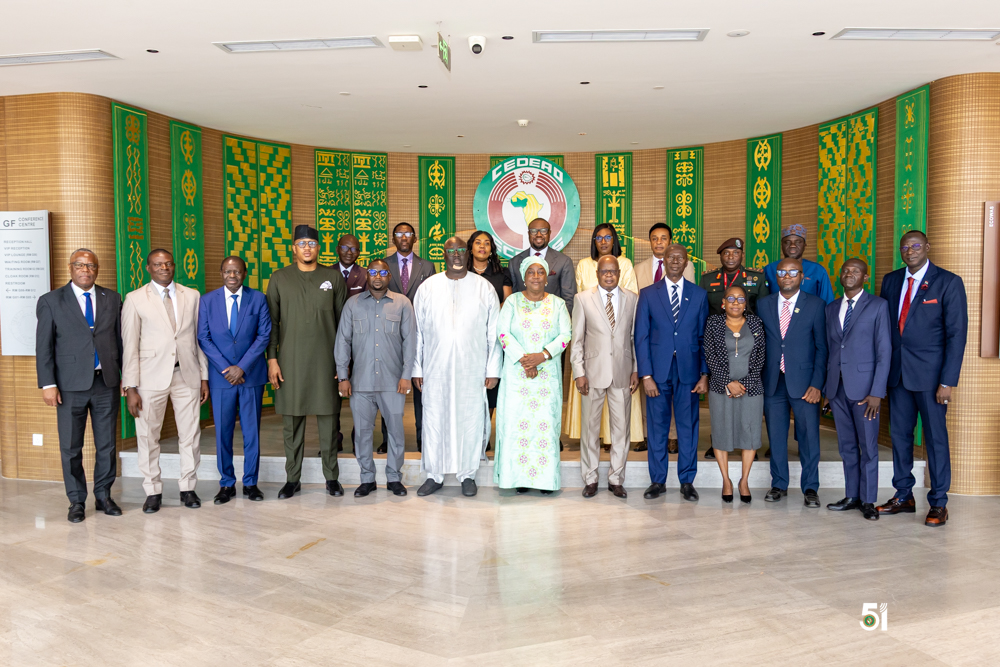
Abuja, Nigeria, 24 November 2026: The Economic Community of West African States (ECOWAS) has renewed its call for stronger regional solidarity, coordinated action and practical solutions to address the increasingly complex political, security and humanitarian challenges confronting West Africa. The call was made at the 45th Session of the Mediation and Security Council (MSC) at the Ambassadorial Level, in Abuja, Nigeria.
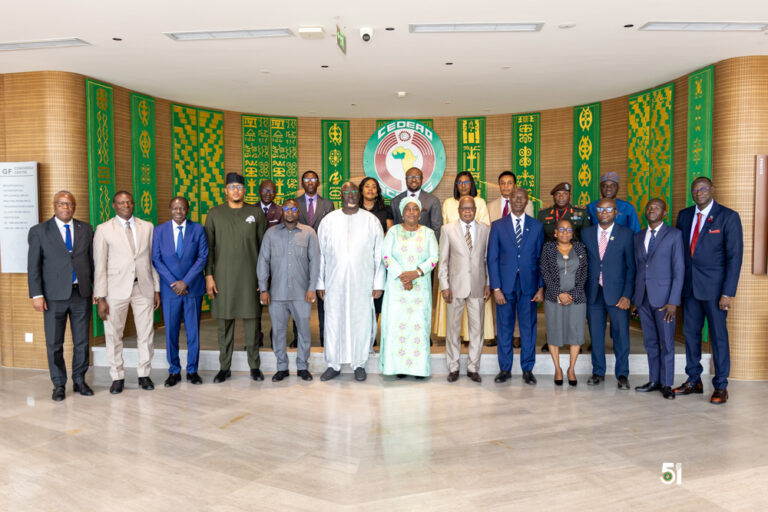
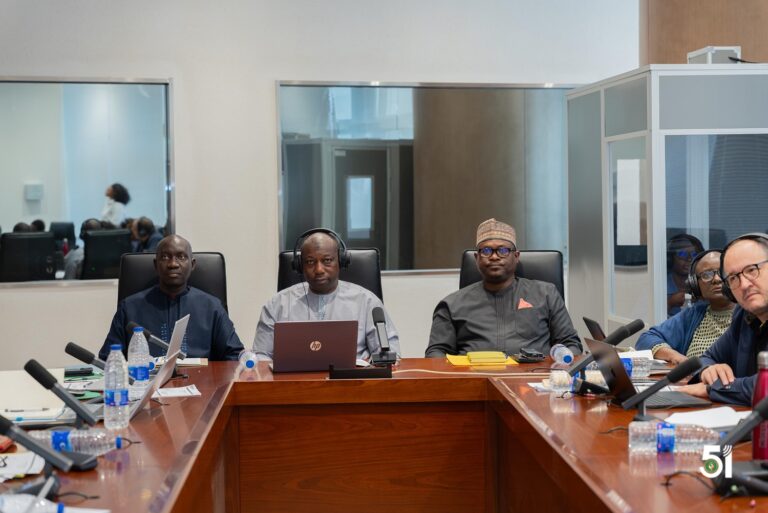
The meeting, which held on 23–24 November 2026 at the ECOWAS Commission Headquarters, brought together Ambassadors of Member States to ECOWAS, Directors of the Commission, and officials from the Directorates of Political Affairs, Peace and Security, and Early Warning. Participants reviewed key political, security and humanitarian developments in the region. The agenda covered the regional security situation and activation of the ECOWAS Standby Force; the humanitarian and broader human security situation; illicit drug trafficking and human trafficking; the implementation of National Early Warning and Response Centres; and the draft agenda and work programme for the 57th Session of the MSC at Ministerial Level.
In her welcome statement, the ECOWAS Commissioner for Political Affairs, Peace and Security, H.E. Madam Francess Piagie ALGHALI, underscored the importance of collective responsibility and institutional cohesion in responding to the region’s evolving challenges. She noted that the region’s challenges, including political transitions, threats to constitutional order, violent extremism and terrorism, transnational organised crime, illicit trafficking, forced displacement, food insecurity and climate-related vulnerabilities, are increasingly interconnected and cannot be effectively addressed through isolated national responses.
“Our region is confronted by an increasingly complex and interconnected landscape of political, security and humanitarian challenges. Inconclusive political transitions, pressures on constitutional order, violent extremism and terrorism, transnational organised crime, illicit trafficking and human trafficking, the effects of geopolitical tussling and interference from outside, and other forms of insecurity, continue to undermine regional stability. These threats are further compounded by forced displacement, food insecurity, climate-related vulnerabilities, and the growing humanitarian consequences of conflict. The evolving political landscape requires sustained diplomatic engagement, strategic patience and principled action. Our commitment to constitutional order, democratic governance, credible electoral processes and peaceful political transitions must remain firm and consistent.” Madam Francess Piagie ALGHALI said.
Emphasising the need for a coherent and forward-looking regional approach, the Commissioner identified five strategic considerations that underpinned the Council’s deliberations to include safeguarding the political credibility and cohesion of ECOWAS; translating security commitments into operational capabilities; addressing the humanitarian and broader human security implications of instability; strengthening the link between early warning and early response; and reinforcing institutional coherence and collective ownership. She also stressed the importance of constructive diplomatic engagement in addressing developments in Guinea-Bissau, relations between ECOWAS and the Confederation of the Alliance of Sahel States (AES), and the broader political dynamics shaping regional cohesion.
On regional security, the Commissioner called for renewed attention to the operationalisation of the ECOWAS Standby Force, stressing that the credibility of the Community’s security architecture must be measured by its capacity to respond effectively to emerging threats, rather than merely by the instruments and commitments established. She further emphasised the importance of strengthening cross-border cooperation, intelligence-sharing and coordinated law enforcement responses to illicit drug trafficking, human trafficking and organised criminal networks, while ensuring that the protection of vulnerable populations remains central to regional security interventions.
Declaring the MSC open, the Ambassador of Senegal to the Federal Republic of Nigeria, Permanent Representative to ECOWAS and Chair of the Mediation and Security Council at Ambassadorial Level, H.E. Ambassador Nichola NYOUKY, emphasised the importance of the session in reviewing developments since the previous meeting, assessing the implementation of earlier decisions, and formulating concrete recommendations for consideration by the MSC at Ministerial Level. He called for sustained political engagement, strengthened solidarity among Member States, and a coherent, coordinated regional response to the complex and interconnected political, security, and humanitarian challenges confronting the region.
He described the meeting as a critical opportunity to review developments since the Council’s last session, assess the implementation of earlier decisions and draft clear recommendations for the Mediation and Security Council at Ministerial Level. On the political front, Ambassador NYOUKY stressed the need to balance firm commitment to ECOWAS principles with the flexibility and discernment that effective diplomacy requires. He called for sustained engagement, inclusive political processes and open avenues for dialogue and cooperation, particularly on sensitive regional developments.
“This 45th Session provides a vital opportunity to review developments since our last meeting, assess the implementation of past decisions, and formulate clear recommendations for the consideration of the Mediation and Security Council at Ministerial Level. Our deliberations must be guided by a shared sense of responsibility, candid dialogue, and a collective determination to identify practical, achievable solutions.”
Regarding the ECOWAS Standby Force, the Chair stressed that regional security commitments must be supported by effective coordination frameworks, operational readiness, appropriate institutional arrangements and adequate resources to ensure timely and effective responses to emerging threats. He urged Permanent Representatives to exercise their responsibility as facilitators of consensus, maintaining open channels of communication and ensuring that the perspectives and concerns of their respective Member States are reflected in the Council’s recommendations.
Discover how ECOWAS is transforming communities, economies and the lives of West African citizens — one story at a time.