Initializing...
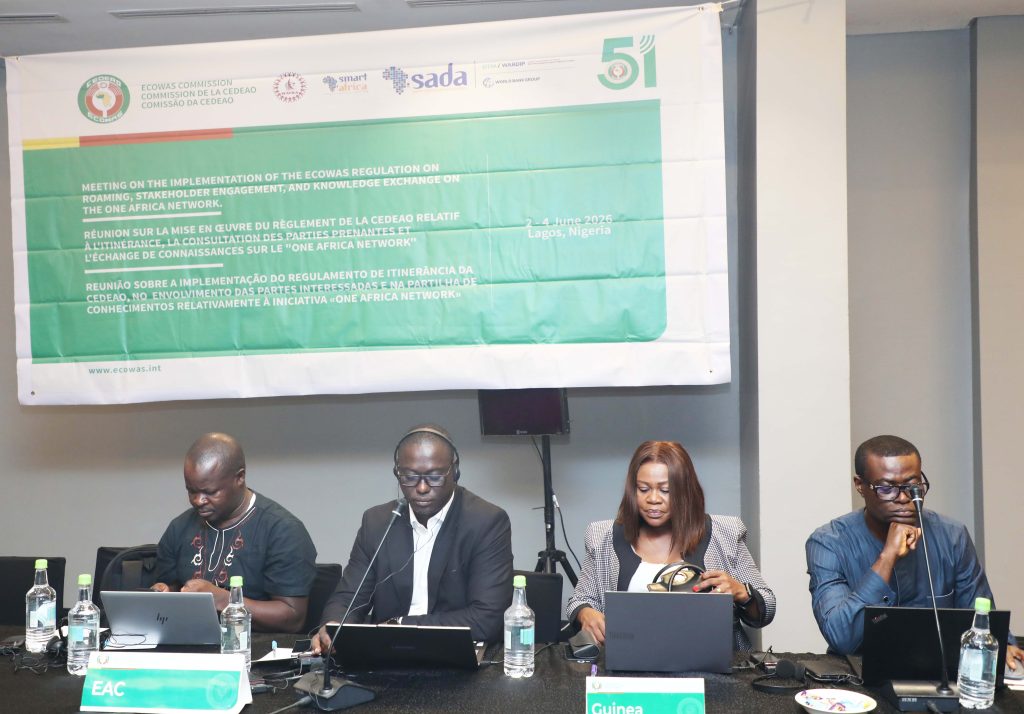
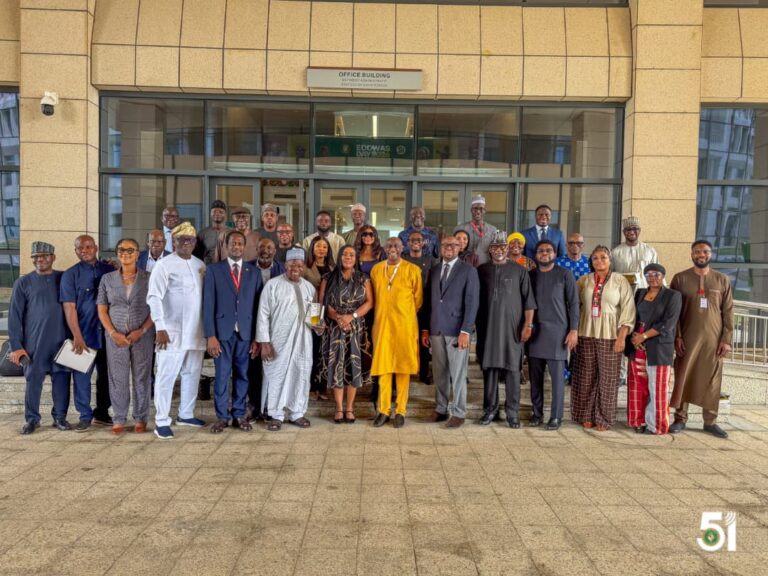
The journey toward a fully integrated, borderless Africa advanced significantly with the ECOWAS workshop on the Implementation of Roaming Regulation, Stakeholder Engagement, and Knowledge Exchange on the One Africa Network. Held in Lagos, Nigeria, from June 2 to 4, 2026, the high-level meeting was a tripartite collaboration between the ECOWAS Commission, the West Africa Telecommunications Regulators Assembly (WATRA), and the Smart Africa Secretariat.
The three-day engagement convened representatives from digital Ministries and national telecommunications regulatory authorities across ECOWAS Member States to identify practical steps for implementing the revised ECOWAS Roaming Regulation. Participation from other Regional Economic Communities (RECs) including the EAC, CEMAC and SADC enriched discussions with insights on scaling roaming initiatives and advancing the One Africa Network vision.
Welcoming delegates on behalf of the President of the ECOWAS Commission, Dr. Omar Alieu Touray, Ms. Folake Olagunju, Director of Digital Economy and Post, stressed that Africa’s single market ambitions depend on eliminating fragmentation in digital networks. She emphasized that affordable digital mobility must become a core driver of economic integration, not a secondary objective. While acknowledging the progress made since the 2017 ECOWAS Roaming Regulation, she noted that implementation challenges identified through market feedback have necessitated a review of the framework. She also commended pioneering roaming initiatives milestones across Africa, including bilateral successes such as in Gabon.
Mrs. Thelma Quaye, Director for Infrastructure, Skills and Empowerment at Smart Africa, highlighted that despite progress in broadband expansion, high cross-border communication costs continue to hinder regional integration and delay the realization of Africa’s Single Digital Market. She explained that the One Africa Network (OAN) seeks to create a seamless and affordable communications ecosystem by linking existing regional roaming frameworks rather than replacing them, and praised ECOWAS for its leadership and recent ministerial commitment to affordable connectivity.
In his remarks, Mr. Aliyu Aboki, Executive Secretary of WATRA, acknowledged that the ECOWAS Roaming Regulation provides a strong foundation for enabling seamless communication across borders. However, he stressed that the effective implementation requires coordinates regional action and regulatory harmonisation, reaffirming WATRA’s commitment to providing technical and analytical support to bridge the gap between policy and execution.
Delivering the opening remarks, Mr. Edward Sam, Deputy Director of Communications at the Ministry of Communication Technology and Innovation, Republic of Sierra Leone, underscored the alignment between the One Africa Network and the broader goal of empowering citizens with affordable, seamless cross-border communication. He noted encouraging progress in ECOWAS, including existing roaming arrangements in compliance with the provisions of the ECOWAS Regulation, and called for sustained collaboration to translate discussions into tangible results.
At the close of the meeting, participants unanimously reaffirmed that affordable roaming is critical to regional connectivity and socio-economic integration. They emphasized the need to move from policy frameworks to measurable outcomes, supported by institutional commitment and adequate resource allocation. Key agreements included advancing progressive tariff harmonization within West Africa, establishing clear wholesale and retail reference rates, conducting regional cost studies, and introducing cost-based roaming caps over time. Participants also validated the continued use of bilateral regulatory agreements as the most practical approach to ensuring compliance, given varying national tariff structures. On the technical front, the meeting addressed the inefficiencies of routing intra-African traffic outside the continent. Proposed solutions included establishing African inter-IPX peering points, expanding cross-border interconnection infrastructure, and optimizing national and regional Internet Exchange Points (IXPs).
The workshop concluded with the adoption of a roadmap outlining short, medium and long-term actions required to integrate affordable roaming initiatives across West Africa into the braoder One Africa Network architecture.
Discover how ECOWAS is transforming communities, economies and the lives of West African citizens — one story at a time.