Initializing...
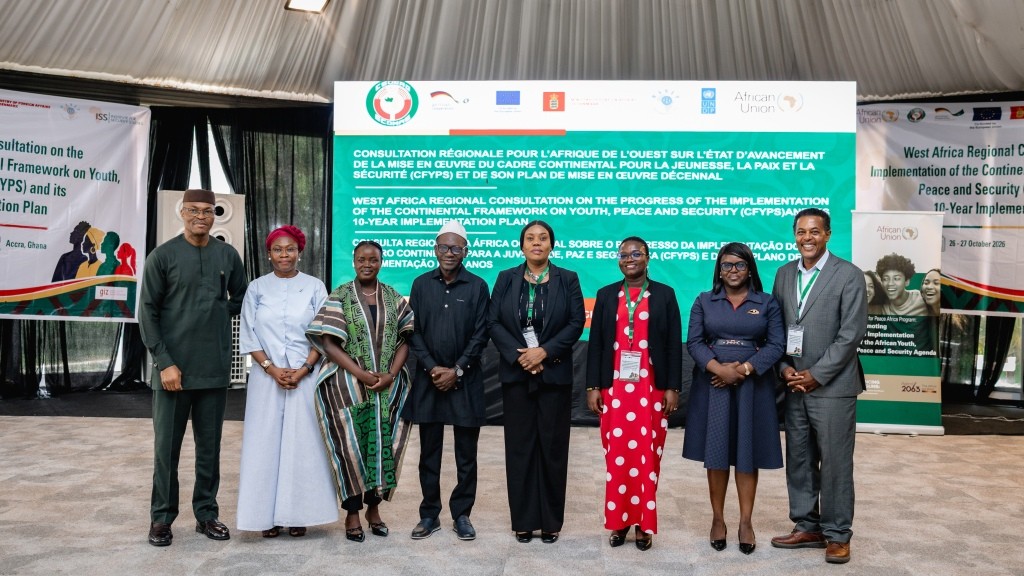
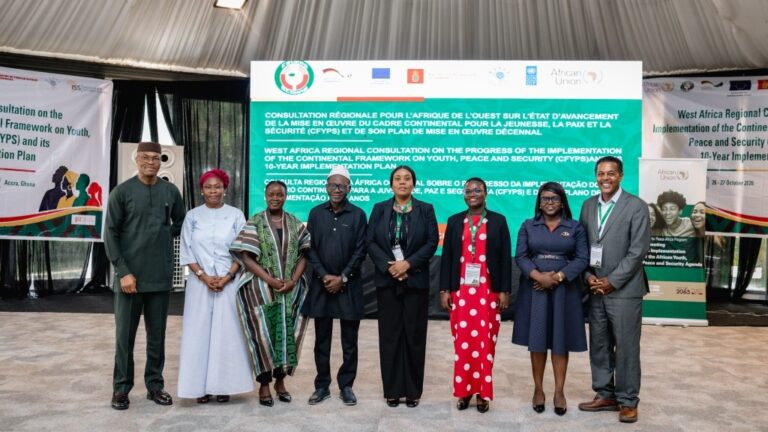
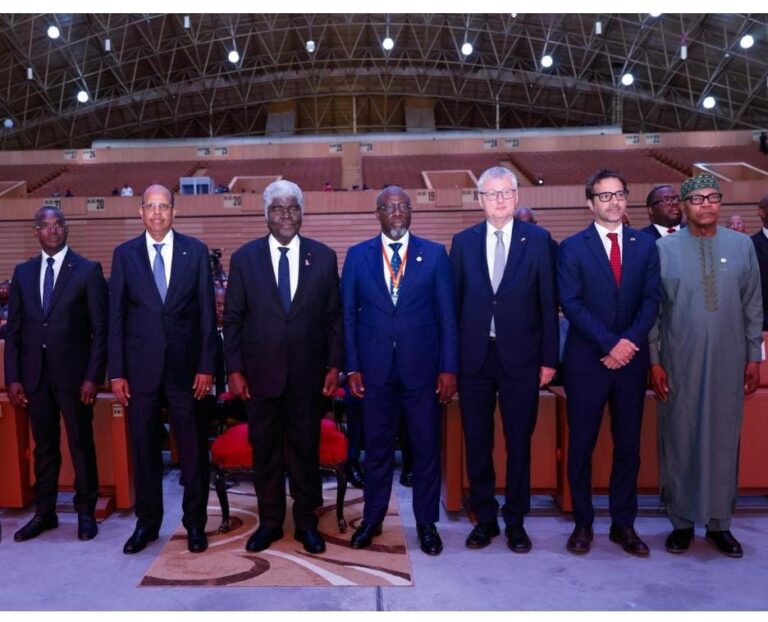
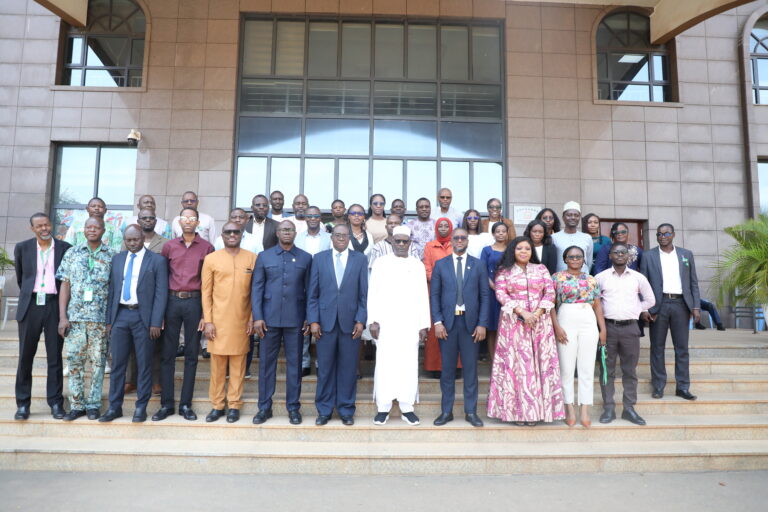
The ECOWAS Commission under the department of Political Affairs, Peace and Security (PAPS), the African Union Commission (AUC), and the West Africa Network for Peacebuilding (WANEP), convened a West Africa Regional Consultation to assess the progress of the implementation of the Continental Framework on Youth, Peace and Security (CFYPS) and its 10-Year Implementation Plan, from 26 to 27 October, 2026 in Accra, Ghana.
The consultation was convened with the technical and financial support of Germany, European Union and Denmark through the GIZ-implemented Support to the African Union for promoting Peace, Security and Governance (AUPSG) in Africa and the EU Support to ECOWAS in Peace, Security and Governance (EPSG) project.
The consultation seeks to assess progress in implementing the Framework at the regional and national levels, identify gaps and challenges, document good practices, and develop evidence-based recommendations to strengthen the Youth, Peace and Security (YPS) agenda through 2029 and beyond.
The initiative is being undertaken under the leadership of the African Union Commission through its Youth for Peace Africa (Y4P) Programme, in collaboration with Regional Economic Communities and Regional Mechanisms (RECs/RMs).
The consultation will examine implementation of the Framework’s five priority areas: Participation, Prevention, Protection, Partnerships and Coordination, and Disengagement and Reintegration. Discussions will also address institutional, financial, technical and policy barriers, as well as coordination and monitoring mechanisms that affect implementation.
In her remarks, the representative of the ECOWAS Commission’s Directorate of Political Affairs Dr. Onyinye Onwuka, Principal Programme Officer, Head of Mediation Coordination & Regional Political Affairs, emphasised the need for meaningful youth participation in peace and security processes, stressing that regional commitments must translate into tangible opportunities for young people to contribute to conflict prevention, security and social cohesion.
She called for evidence-based and forward-looking discussions that reflect local realities and strengthen institutional responses to emerging threats, while also highlighting the importance of developing and implementing National Action Plans on Youth, Peace and Security as essential instruments for translating continental commitments into concrete national action.
Ms. Nuzrat Aba Sam, Representing the Ministry of Youth Development and Empowerment, of the Republic of Ghana, underscored the importance of investing in youth development and empowerment, expanding opportunities for young people and strengthening their participation in governance, peacebuilding and development.
She noted that the future of peace and security in Africa is inseparable from the meaningful inclusion, leadership and participation of its young people.
In her opening remarks, Mrs. Enobong Moma, Head of Component for Women, Youth, Peace and Security under the EU Support to ECOWAS in Peace, Security and Governance project, stressed that policy frameworks can only deliver results when they are nationally owned, sustainably financed and supported by effective monitoring and evaluation mechanisms.
She called on stakeholders to take stock of progress, identify what has worked and what requires improvement, and make the necessary adjustments to strengthen implementation.
Similarly, Ms. Da-do Noviekou, YPS Regional Coordinator at WANEP, reaffirmed the organisation’s commitment to strengthening partnerships with the African Union, ECOWAS, Member States and youth organisations to advance the Youth, Peace and Security agenda across West Africa.
She highlighted WANEP’s regional peace education programme, implemented across the 15 West African countries, as part of efforts to equip young people with the skills and opportunities to contribute meaningfully to peace and security. However, she noted that limited participation in decision-making, socioeconomic challenges, misinformation, hate speech and shrinking civic space continue to constrain youth engagement.
She stressed that young people must be included in decision-making processes from the outset, rather than being consulted only after decisions have been made.
In her concluding remarks, Ms. Paska Nyaboth, from the Youth for Peace Program (AUC) indicated that the outcome of the assessment is expected to be presented to the annual AU Peace and Security Council open session on Youth, Peace and Security.
Participants include National Youth, Peace and Security Focal Points, National Youth Councils, civil society organisations, youth-led networks, representatives of ECOWAS and other RECs/RMs, African Youth Ambassadors for Peace, the African Union Commission and relevant technical partners.
The regional consultation forms part of a broader series of five consultations jointly organised by the African Union Commission and the RECs/RMs to strengthen ownership, coordination, accountability and sustainability in implementing the Continental Framework on Youth, Peace and Security.
Through these deliberations, ECOWAS and its partners seek to reinforce the recognition of young people not merely as those affected by conflict, but as indispensable partners, innovators and leaders in preventing violence, building resilience and sustaining peace across West Africa and the African continent.
Discover how ECOWAS is transforming communities, economies and the lives of West African citizens — one story at a time.