Initializing...
The Economic Community of West African States (ECOWAS), in partnership with the African Development Bank (AfDB) and Africa Rice Center, has officially launched the Regional Resilient Rice Value Chains Development Programme (REWARD-ECOWAS). The Programme Agreement was signed on 10 March 2025, marking a major regional commitment to transforming West Africa’s rice sector, reducing dependence on imported rice and accelerating the region’s ambition of achieving rice self-sufficiency by 2035.
With an overall investment envelope of approximately US$850 million across participating countries, REWARD brings together complementary regional interventions to strengthen West Africa’s rice value chains. These include US$12 million allocated to the ECOWAS-led regional policy and regulatory reform component, alongside a US$1.2 million ECOWAS in-kind contribution; US$8.5 million for AfricaRice-led regional technical support; and US$9.44 million for climate adaptation interventions. The programme represents a significant step towards building a more productive, competitive and climate-resilient rice economy across the region. It is designed to strengthen rice production, processing and marketing, improve agricultural policies and regulatory frameworks, and expand opportunities for farmers, agribusinesses and other actors across the rice value chain in 15 West African countries, namely Benin, Burkina Faso, Cape Verde, Côte d’Ivoire, Gambia, Ghana, Guinea, Guinea-Bissau, Liberia, Mali, Niger, Nigeria, Senegal, Sierra Leone, and Togo
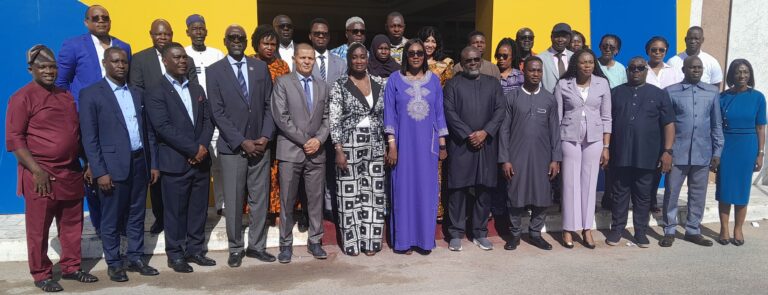
The official launch and the steering committee inauguration come at a critical time, as West Africa continues to face a substantial gap between rice production and consumption, leaving countries exposed to international market disruptions, price volatility, and rising food import costs. The Director of Agriculture and Rural Development, Dr. Madadozi Tezike welcomed all the dignitaries and participants, noting that the occasion will provide the opportunity for the region to deepen cooperation and support effective implementation, for REWARD to deliver tangible benefits to farmers, processors, agribusinesses and consumers across West Africa.
Speaking at the event, ECOWAS Commissioner for Economic Affairs and Agriculture Mr Dehpue Yenpea Zuo, underscored that food sovereignty could not be achieved through declarations alone but required decisive action to strengthen local production, improve agricultural productivity, and build competitive regional value chains.
He highlighted the regional investment ambition, disclosing that the wider rice investment portfolio was estimated at approximately US$25 billion, with US$1.5 billion in firm investment commitments mobilised at the West Africa Rice Investment Roundtable in Accra, Ghana. This represents an important step towards translating the ECOWAS Rice Agenda and Regional Rice Roadmap 2025–2035 into tangible investments and results.
Beyond Production: Building a Competitive Regional Rice Economy
In his opening remarks, the African Development Bank representative, Dr. Abdul KAMARA, the Acting Vice President, emphasised that West Africa must move beyond producing rice primarily for domestic consumption and develop the capacity to process, market and trade competitive rice across regional and international markets.
He reaffirmed the Bank’s commitment to supporting resilient agricultural production systems and strengthening the entire rice value chain. He emphasized that the real measure of this programme’s success will not just be the ceremonial launch itself, but what we collectively deliver thereafter. The wider REWARD investment is expected to mobilise substantial resources and benefit more than one million farmers, with particular attention to expanding opportunities for women and young people.
The representative of the Director-General of the Africa Rice Center, Dr. Sali Atanga, reaffirmed the importance of scientific research, technological innovation and regional cooperation in transforming West Africa’s rice sector. He stressed that challenges such as inadequate access to improved seeds, climate variability, limited mechanisation, post-harvest losses and insufficient private-sector investment continued to constrain productivity and competitiveness. He called for stronger collaboration between research institutions, governments and private-sector actors to accelerate the adoption of improved technologies and climate-resilient production practices.
Closing the Regional Rice Production Gap
Providing further insight into the Regional Rice Development Agenda, the Coordinator of the ECOWAS Rice Agenda and REWARD Programme, Dr Boladale Adebowale, highlighted the significant gap between rice production and consumption in West Africa. She noted that the region would need to produce approximately 35 million metric tonnes of rice to meet projected demand and achieve its 2035 rice self-sufficiency ambition. She emphasised that closing this gap would require increased productivity, expanded processing capacity and more efficient marketing and distribution systems. She also underscored the strategic role of the ECOWAS Rice Observatory (ERO) in strengthening regional coordination, tracking investments and fostering collaboration among stakeholders to ensure greater coherence and impact across the rice sector. She underscored the importance of synergy and sustained strategic partnerships for the effective delivery of REWARD.
From regional commitments to measurable results
REWARD is structured around four components: (1) sustainable and climate-resilient rice production systems; (2) promotion of competitive local rice processing and marketing; (3) policy and regulatory reforms to enhance regional harmonisation and competitiveness; and (4) programme coordination and management. ECOWAS leads Component 3, focusing on national and regional policy reforms, regulatory harmonisation and strengthening the regional rice trade framework, as well as the overall coordination responsibilities which comes with chairing the Regional Steering Committee and the Regional Technical Coordination Committee. AfricaRice serves as a co-implementing partner, providing regional technical support under Components 1 and 2, particularly in fostering innovation across rice production, processing and value chains. These interventions are expected to improve farmers’ productivity and incomes, strengthen the capacity of rice processors, expand opportunities for women and young people, and facilitate cross-border trade in locally produced rice.
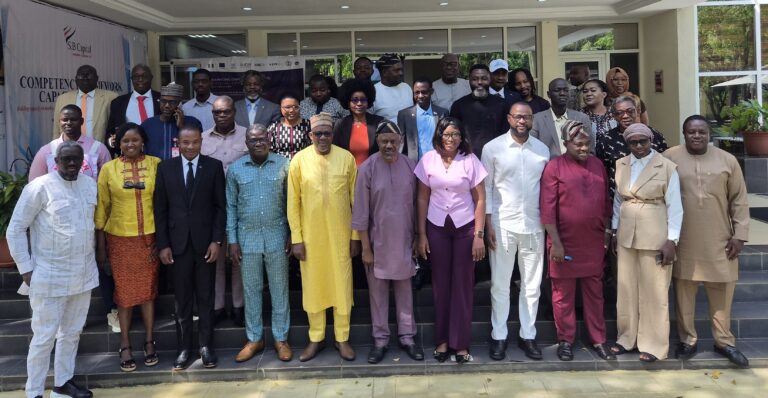
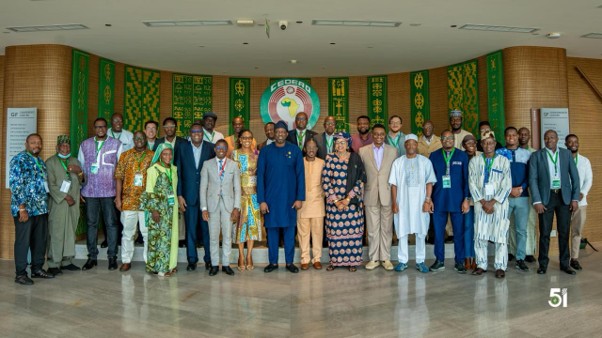
The launch also marked an important institutional milestone with the inauguration of the Regional Steering Committee, which will provide strategic oversight and strengthen coordination among participating institutions and development partners.
A shared Regional Ambition
Beyond its immediate development objectives, REWARD represents a strategic investment in West Africa’s economic integration, employment generation and long-term food security. Mr. Hatem Fellah, the AfDB REWARD Portfolio Manager, said that REWARD reinforces the commitment of the Bank during the Dakar 2 Summit, the vision of the ECOWAS Rice Agenda and the Regional Rice Roadmap 2025–2035, providing a platform for countries to leverage their respective agricultural capacities, investments, technologies and markets towards a common regional objective.
The challenge ahead is to translate the financial commitments and institutional partnerships into tangible outcomes for farmers, processors, agribusinesses and consumers.
For ECOWAS, the ambition is clear: to move West Africa from rice import dependence to a more productive, resilient and competitive regional rice economy, where local production meets growing demand and regional markets become stronger drivers of food security and prosperity. REWARD is therefore more than a development programme; it is a regional commitment to investing in rice, building resilience and securing West Africa’s food future.
Closing Ceremony
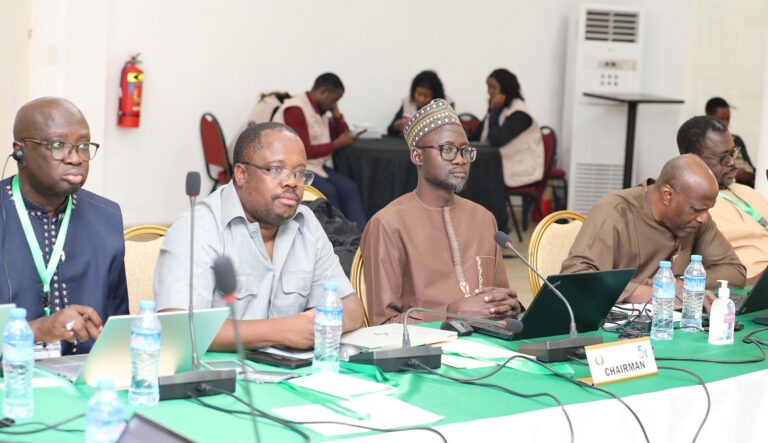
Members of the Regional Steering Committee held a technical working session, which served as the Committee’s inaugural meeting, to deepen their understanding of the programme’s scope, implementation priorities and the level of commitment required to ensure its successful delivery. During the session, the Committee reviewed the activities under Component 3, identified areas of alignment, and highlighted specific activities requiring the interest, engagement and support of members during the implementation phase. It was further emphasised that ECOWAS would ensure a bottom-up approach to implementation, ensuring that national priorities are adequately reflected in and aligned with regional interventions.
During the closing ceremony, the Vice President of the ECOWAS Commission, His Excellency, Mr. Anthony Ogunjimi highlighted the importance of the discussions and noted that the engagement had strengthened stakeholders’ understanding of ECOWAS’ leadership role, particularly under Component 3, as well as institutional responsibilities and coordination arrangements. He underscored the importance of these outcomes in providing direction for effective implementation, monitoring, reporting and accountability. He further reaffirmed ECOWAS’ commitment to strengthening the programme’s coordination structures to ensure that commitments are translated into coordinated actions and measurable results.
He also urged all relevant stakeholders across the West African rice sector to take ownership of the programme and actively participate in its implementation, emphasising that REWARD is a shared regional commitment that requires collective responsibility and sustained engagement. He particularly commended the African Development Bank for its partnership and continued support towards advancing the programme’s objectives.
Discover how ECOWAS is transforming communities, economies and the lives of West African citizens — one story at a time.