Initializing...
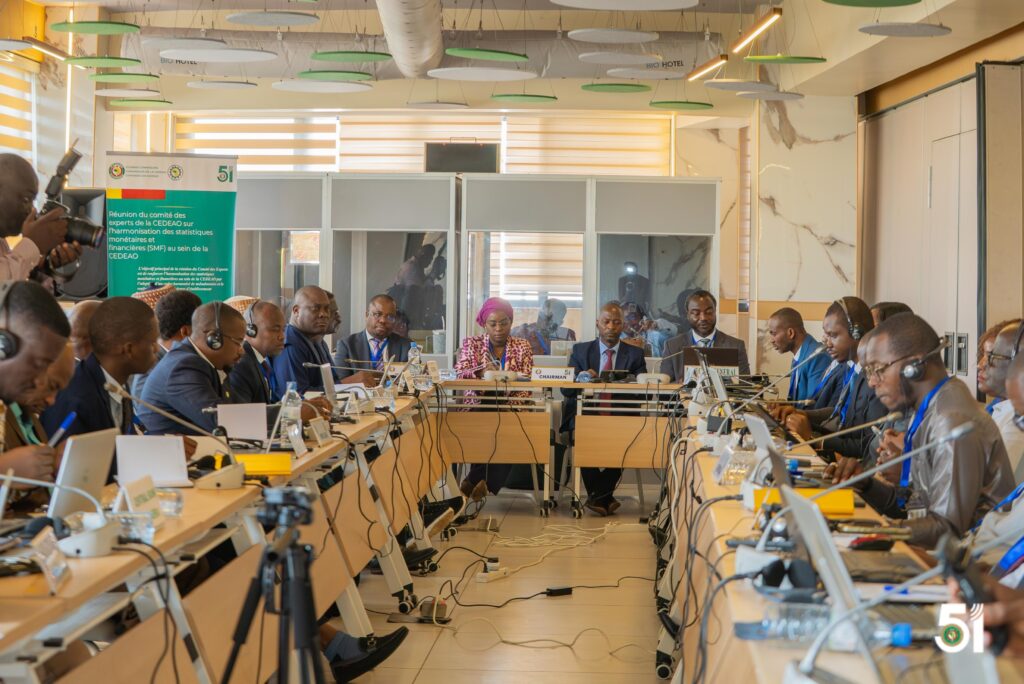
The Economic Community of West African States (ECOWAS) Commission concluded two regional workshops on November 6 and 7, 2026, in Lomé, Togo, focused on strengthening the regional statistical system. These meetings focused, on the one hand, on the harmonization of monetary and financial statistics and, on the other hand, on the validation of the 2026 edition of the ECOWAS Yearbook of Sectoral Statistics with the Commission’s technical directorates.
Organized with financial support from the World Bank, these workshops provided an opportunity to take stock of progress made, identify ongoing challenges, and formulate concrete recommendations to improve the availability, quality, reliability, and comparability of statistics within the Community.
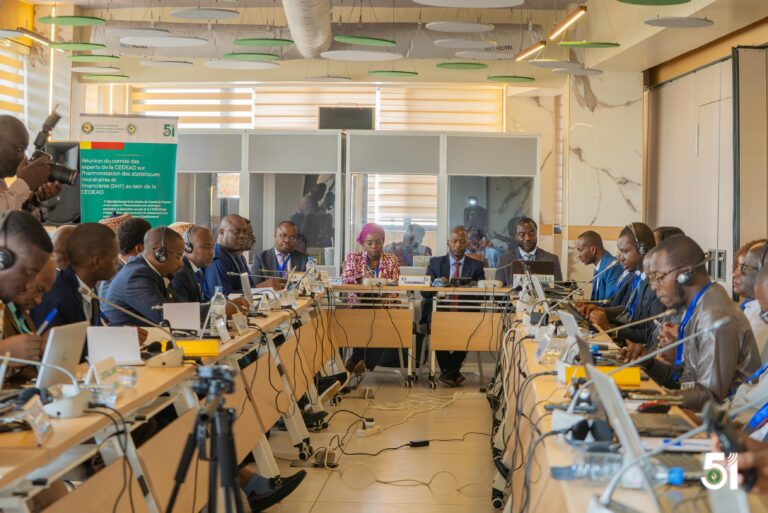
From November 2 to 7, 2026, the meeting of the Committee of Experts on the Harmonization of Monetary and Financial Statistics (MFS), organized by the West African Monetary Agency (WAMA) in collaboration with the ECOWAS Commission, marked an important step in strengthening the regional statistical framework, particularly with a view to implementing the ECO single currency project.
The meeting provided an opportunity to review the draft regional metadata framework for the compilation of monetary and financial statistics, national practices of central banks, and the status of implementation of the regional action plan adopted by the Committee of Experts.
The discussions highlighted several challenges, including the still uneven application of international statistical standards, shortcomings in the geographic breakdown of financial positions between ECOWAS countries and the rest of the world, limited coverage of other financial institutions, and difficulties related to data collection, validation, and transmission.
Following the discussions, the experts agreed on the need to continue efforts to harmonize monetary and financial statistics at the regional level. In particular, they emphasized the importance of finalizing and adopting a common metadata framework, consistent with the guidelines of the IMF’s 2016 Manual and Guide to the Compilation of Monetary and Financial Statistics. They also stressed the need to establish a regional residency framework that will make it possible to better distinguish financial positions among Community countries from those vis-à-vis the rest of the world.
Participants further noted the need to expand statistical coverage to other systemically important financial institutions, particularly pension funds, insurance companies, and other relevant financial intermediaries. In the same vein, they called for harmonization of the methods used to calculate interest rates and credit statistics, in order to ensure greater comparability of data among member states.
Finally, the experts emphasized the need to strengthen national systems for data collection, validation, and transmission, notably through more systematic use of the harmonized 1SR and 2SR forms. They also stressed that achieving these objectives will require developing the technical skills of national teams as well as closer cooperation between national and regional institutions.
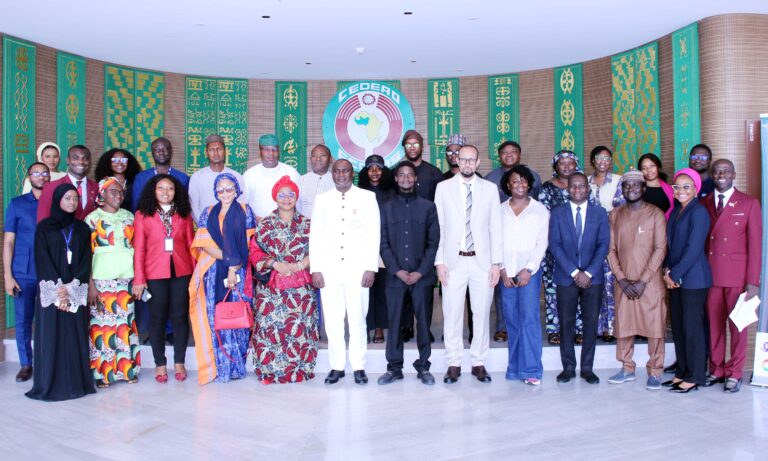
Concurrently, from November 3 to 6, 2026, the ECOWAS Commission’s Directorate of Research and Statistics (DRS) organized a workshop to share and review the draft 2026 edition of the ECOWAS Sectoral Statistics Yearbook with the Commission’s technical directorates.
The purpose of this meeting was to compare the data collected from member states with that available within the technical directorates, in order to verify its consistency and enhance the quality of the document prior to its publication.
The workshop provided an opportunity to review the various tables and indicators in the yearbook, covering areas such as sociodemographics, agriculture and forestry, energy, mining, industry, infrastructure, and services.
The discussions led to several important conclusions, notably the need to correct inconsistencies identified in certain national statistical series, to harmonize units of measurement and indicator definitions, to clarify table headings, and to improve the yearbook’s thematic coverage.
Participants also recommended incorporating new variables into future editions, particularly those related to population projections, migration, climate vulnerability, population displacement, national accounts, and education statistics.
Following the review and validation of the ECOWAS 2026 Sectoral Statistical Yearbook, participants formulated several recommendations aimed at strengthening the institutional framework for the production, management, and dissemination of Community statistics.
At the institutional level, they specifically recommended strengthening coordination among the Commission’s various directorates through the establishment of a technical working group tasked with supporting the Directorate of Research and Statistics (DRS) in implementing the Yearbook and developing the Community statistical information system.
Participants also emphasized the need to strengthen collaboration with national statistical institutes and to ensure the sustainability of the network of focal points responsible for data collection. Furthermore, they stressed the importance of allocating budgetary resources specifically dedicated to this activity.
Finally, the experts recommended the development of an ECOWAS Statistical Information System to facilitate the centralization, management, and sharing of data produced by the Commission’s various directorates. A roadmap was also established to finalize and disseminate the 2026 edition of the Yearbook.
Beyond their respective themes, the two workshops highlighted a common priority: making reliable, harmonized, accessible, and comparable statistics a true driver of regional integration and public policy development.
The conclusions of the workshops underscore the importance of better coordination among national and regional institutions, strengthening technical capacity, improving data collection and validation mechanisms, and establishing common tools for managing and disseminating statistical information.
The ECOWAS Commission thus intends to continue its efforts to consolidate an integrated regional statistical system, based on harmonized standards and strengthened collaboration among the various stakeholders.
Through these initiatives, ECOWAS reaffirms its commitment to promoting more effective statistical governance and ensuring access to high-quality data to support the monitoring of Community policies, macroeconomic surveillance, development planning, and the deepening of regional integration—particularly with a view to the implementation of the ECO single currency..
Discover how ECOWAS is transforming communities, economies and the lives of West African citizens — one story at a time.