Initializing...
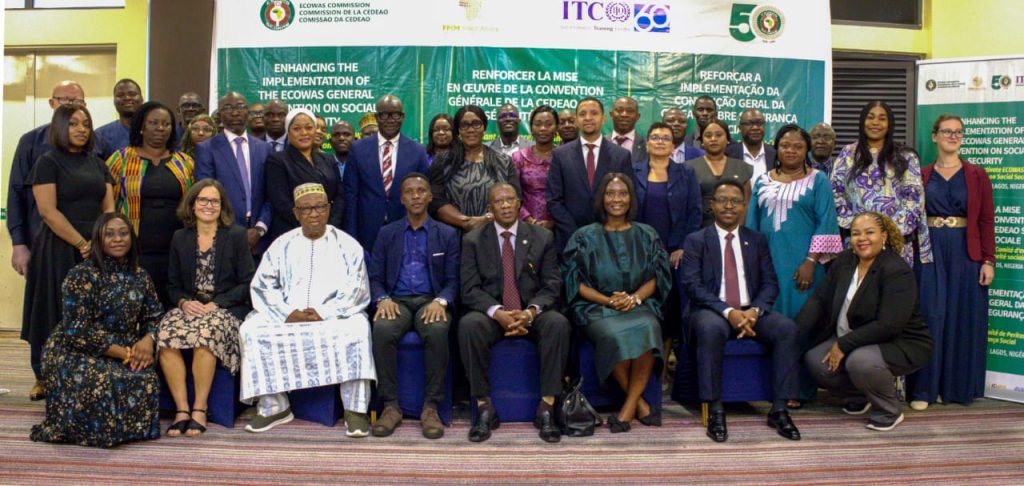
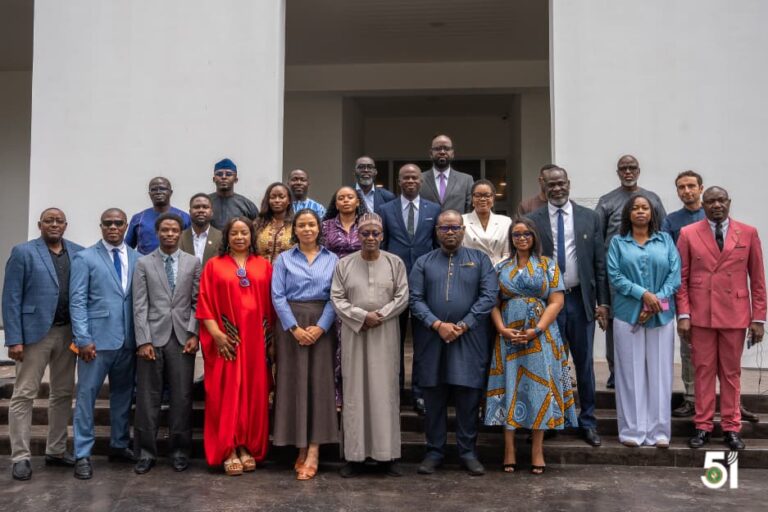
ECOWAS Commission in collaboration with the International Labour Organization (ILO) and the International Training Centre of the ILO (ITCILO has successfully reactivated the Committee of Experts on Social Security (CESS) following a four-day meeting in Lagos, Nigeria, from the 4th to 7th November, 2025.
The four-day workshop, delivered concrete outcomes to advance social protection for millions of migrant workers across ECOWAS region as well as enhancing the capacity of the members of the Committee of Experts on Social Security and key Institutions and ECOWAS Directorates regarding the role and effective implementation and promotion of the ECOWAS General Convention on Social Security. The meeting also validated the Social Protection Policy Brief, the establishment of relevant technical working groups, and the revision and review of thematic documents for continuous implementation by the committee.
In his opening address, Dr. Alves D’Almada Fernando Jorge, speaking on behalf of the Commissioner for Human Development and Social Affairs, Prof. Fatou Sow Sarr, and the Director of Humanitarian and Social Affairs, Dr Sintiki Tarfa Ugbe, welcomed all, participants reaffirmed ECOWAS’s commitment to advancing social protection and labor migration governance in West Africa. He recalled that migration is a central pillar of ECOWAS’s regional integration agenda and noted that the ECOWAS General Social Security Convention, developed in collaboration with the ILO, was adopted to guarantee equal treatment and social security portability for migrant workers across the region. Dr. Alves explained that the Convention seeks to coordinate national social security systems to ensure that workers maintain their benefits when moving between member states, in line with international labor standards such as ILO Convention No. 102.
Dr. Alves Fernando, on behalf of the Commissioner, thanked the experts for their valuable work and invited them to deliberate on the documents submitted to them and to chart the way forward. He concluded by encouraging constructive dialogue and cooperation among participants to ensure the meeting’s success.
Delivering his keynote address on behalf of Sierra Leone’s Minister of Employment, Labour and Social Security, the chair of the meeting, Mr. Duraman Maada Songo emphasized that social security is a fundamental human right and a cornerstone of social justice essential for inclusive development in West Africa. He reaffirmed the region’s collective commitment to the ECOWAS General Convention on Social Security, which promotes benefit portability and regional solidarity in line with the AU’s Agenda 2063 and ILO standards. Mr. Songo acknowledged ongoing implementation gaps, particularly affecting informal and vulnerable workers, and called for expanded coverage, sustainable financing through innovative mechanisms, strengthened governance using digital tools, and gender- and disability-sensitive systems. He urged the harnessing of technology, partnerships, and capacity-building to improve delivery and accountability, citing successful models from Ghana, South Africa, and Kenya as proof that progress is achievable with strong political will. To conclude, he called for renewed collaboration among member states to ensure that all workers in the ECOWAS region enjoy equitable and sustainable social protection, formally declaring the meeting open.
In her opening statement at the Committee of Experts Meeting on Social Security held in Lagos, Dr. Vanessa Phala, Director of the ILO Office for Nigeria, Ghana, Liberia, Sierra Leone, and Liaison Office for ECOWAS, emphasized that social protection is both a human right and an economic necessity. She underscored its role in reducing poverty, exclusion, and inequality while fostering social cohesion and stability. Reaffirming the ILO’s commitment, she highlighted that social protection is central to the Decent Work Agenda and grounded in international frameworks such as the Universal Declaration of Human Rights, ILO Convention No. 102, and Recommendation No. 202. Dr. Phala reiterated the vision of universal access to income security and healthcare, stressing the need to extend coverage to migrant and informal workers as a foundation for inclusive growth and regional integration.
Discover how ECOWAS is transforming communities, economies and the lives of West African citizens — one story at a time.