Initializing...
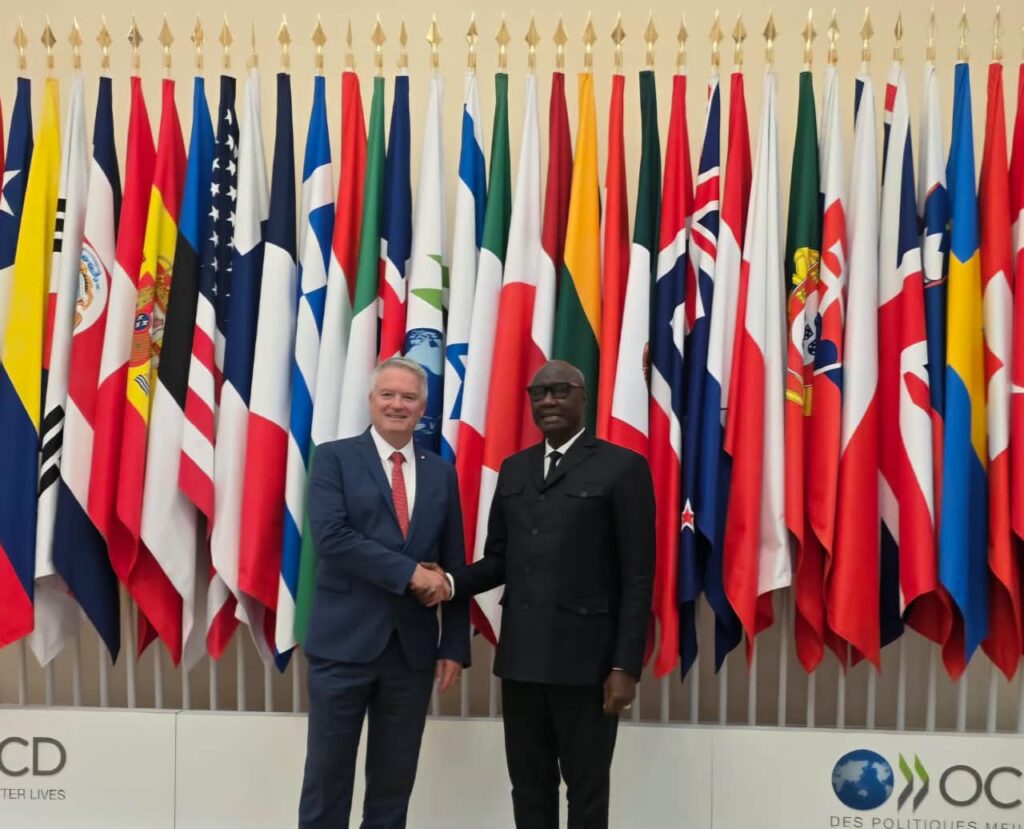
The President of the ECOWAS Commission, H.E. General Birame Diop, has reaffirmed the commitment of the Economic Community of West African States (ECOWAS) to strengthening its strategic partnership with the Organisation for Economic Co-operation and Development (OECD), with a renewed focus on regional integration, institutional reforms, investment mobilisation and sustainable development in West Africa.
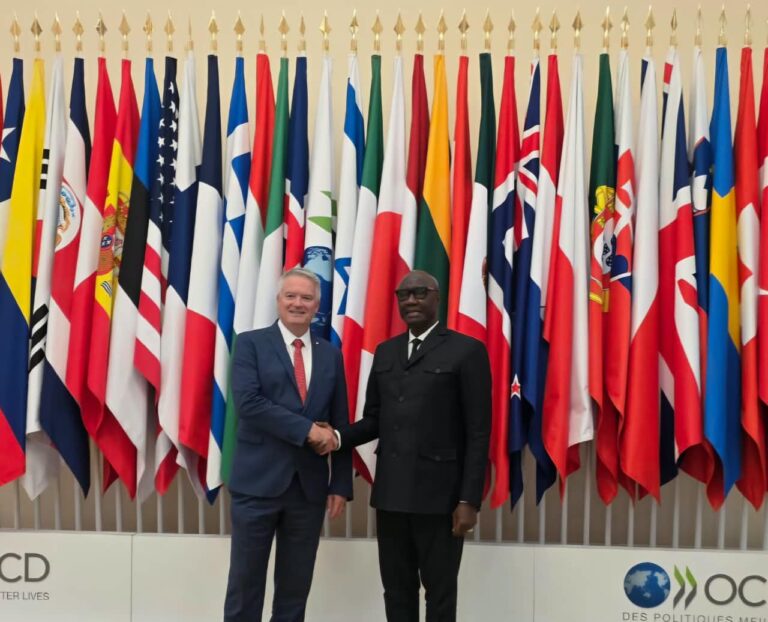
President Diop made this commitment during an official working visit to OECD Headquarters in Paris, France, the 1st October 2026, where he held high-level discussions with the OECD Secretary-General, Mr. Mathias Cormann, and senior officials of the Organisation. The visit, undertaken as part of his first official engagements following his assumption of office on 1 September 2026, provided an opportunity to review progress in implementing the ECOWAS–OECD Memorandum of Understanding (MoU), signed in October 2025, and explore new avenues of cooperation under the Enhanced OECD-Africa Partnership.
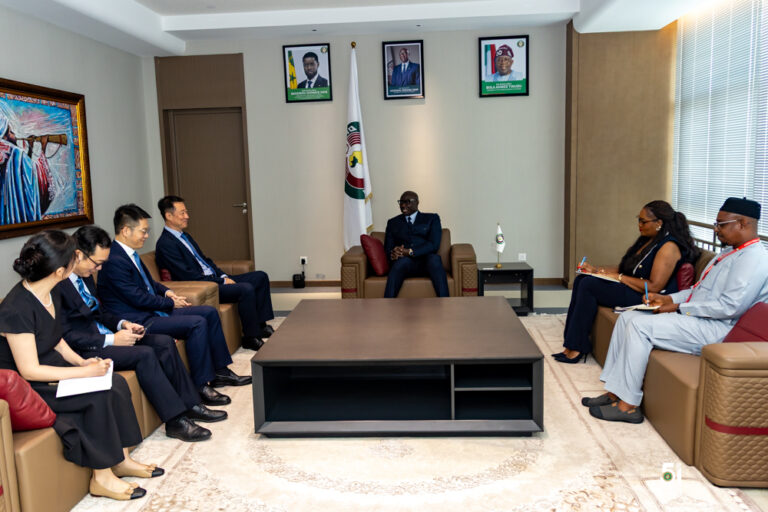
During his bilateral meeting with the OECD Secretary-General, President Diop underscored the shared commitment of both institutions to regional integration, multilateral cooperation, evidence-based policymaking and sustainable development. He stressed that translating the MoU into tangible results would require sustained political commitment, technical cooperation and the necessary resources from both sides.
The President also briefed the OECD Secretary-General on the outcomes of the 69th Ordinary Summit of the ECOWAS Authority of Heads of State and Government, highlighting the adoption of the Compact for the Future of Regional Integration, ongoing institutional reforms and the new ECOWAS Commission leadership’s determination to strengthen implementation and delivery of agreed regional priorities.
Mr. Cormann reaffirmed the OECD’s commitment to deepening cooperation with ECOWAS under the Enhanced OECD-Africa Partnership. He highlighted the economic potential of the African Continental Free Trade Area (AfCFTA) and the importance of open markets and regional integration in promoting sustainable economic growth. He also invited ECOWAS to participate in the OECD Africa Partnership Board, which provides a platform for contributing to the strategic orientation of the partnership.
Discussions identified several priority areas for enhanced cooperation, including AfCFTA implementation, investment promotion and the mobilisation of quality foreign direct investment, capital market development, food security and agricultural transformation, infrastructure connectivity, critical minerals value chains, governance and institutional reforms, and regional competitiveness.
The ECOWAS delegation also met with the OECD Directorate for Global Relations and Cooperation and participated in a high-level dialogue on the Enhanced OECD-Africa Partnership, bringing together representatives of regional and international institutions, OECD member countries and West African partners.
During these engagements, President Diop emphasised that the central mandate of the new ECOWAS Commission management is to ensure effective implementation of agreed programmes and policies. He highlighted the importance of strong institutions, sound regulatory frameworks, effective competition policies and an improved business environment in attracting investment and advancing regional economic transformation.
The discussions further underscored the importance of integrating peace and security considerations into development initiatives, strengthening capital markets and exploring analytical support for the future ECOWAS single currency programme. Participants also acknowledged the role of the Sahel and West Africa Club (SWAC) in promoting policy dialogue, regional analysis and partnership-building.
The visit reaffirmed the shared commitment of ECOWAS and the OECD to advancing the implementation of the ECOWAS–OECD MoU and supporting the ECOWAS Compact for the Future of Regional Integration. The OECD expressed its readiness to support ECOWAS through policy advice, peer-learning mechanisms, governance assessments and capacity development, with particular emphasis on AfCFTA implementation, infrastructure connectivity and investment promotion.
To ensure effective follow-up, both institutions will strengthen regular technical consultations and work towards translating the outcomes of the visit into a joint programme of activities. Proposed next steps include establishing a joint technical coordination mechanism, designating institutional focal points and developing a joint ECOWAS–OECD work programme aligned with the MoU.
The visit marks an important milestone in relations between ECOWAS and the OECD and reinforces the determination of both institutions to build a forward-looking partnership that delivers concrete benefits for the people of West Africa.
Discover how ECOWAS is transforming communities, economies and the lives of West African citizens — one story at a time.