Initializing...
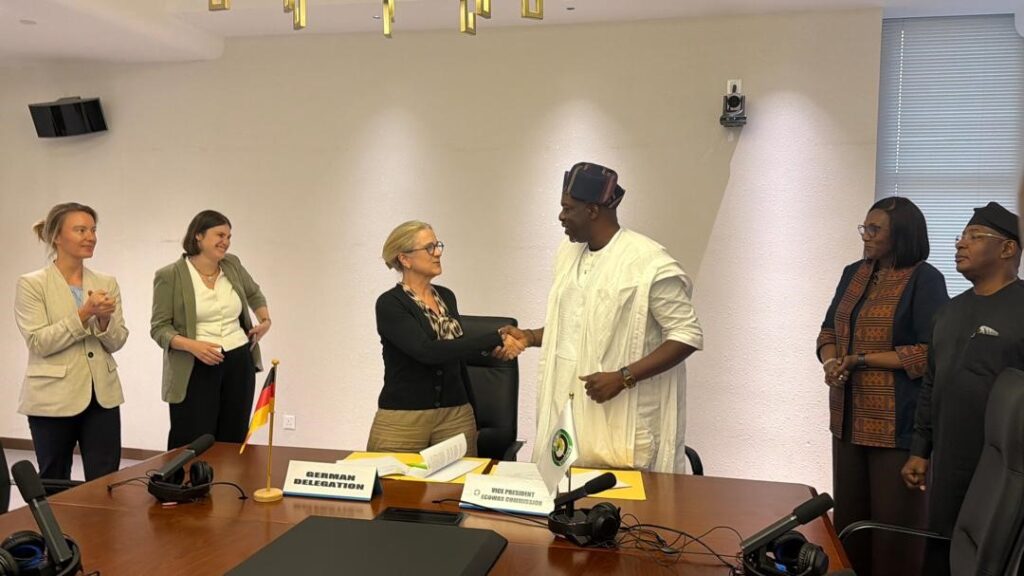
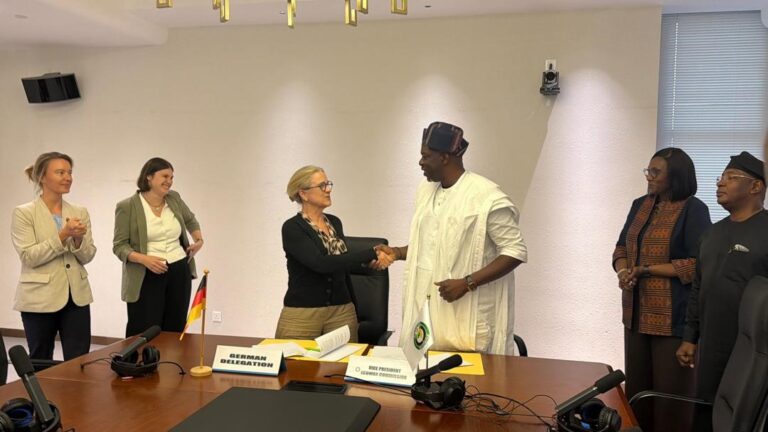
The ‘‘strategic dialogue’’ on development cooperation between the Economic Community of West African States (ECOWAS) and Germany concluded on the 5th of November 2026 in Abuja, Nigeria.
This new format for discussions marks a shared commitment to moving towards more open, in-depth and constructive cooperation between the two partners, who have been working together since 1985. The partners have thus reaffirmed their joint commitment to several key pillars for the coming years. Conflict prevention, management and resolution, constitute one of the priority objectives of this new partnership cycle.
This strategic focus involves strengthening early warning systems, optimising mediation processes, establishing multi-stakeholder dialogue frameworks, and renewing the ‘‘ECOWAS Peace and Security Project’’ as well as the technical and financial components of the ‘‘Regional Stabilisation and Development Fund for Fragile Regions’’.
The two delegations also emphasised the facilitation of trade, the removal of non-tariff barriers, the strengthening of regional value chain integration and preparations for the German-African Business Summit scheduled to take place in Ghana in 2026.
They also discussed infrastructure sustainability, the ‘‘climate-human mobility’’ nexus, donor coordination and continued efforts in disease prevention, particularly in the face of epidemic risks such as Ebola.
They also reviewed the threats facing the region, such as poverty, hunger, disease, human rights violations and the impacts of climate change.
Both parties reaffirmed their commitment to bringing about the establishment of a West African single market and an integrated electricity grid. Joint actions will aim to improve investment conditions, reduce regional trade barriers, develop high-quality infrastructure and finance modern infrastructure projects.
The renewed partnership between ECOWAS and Germany also aims to strengthen health systems and give top priority to health and the empowerment of vulnerable groups, particularly women. Thus, sexual and reproductive health and rights are recognised as essential to the well-being of women and girls, as well as to the balance of society.
In terms of economic integration and regional prosperity, Germany has reaffirmed its close collaboration with the West African Economic and Monetary Union (UEMOA) through the West African Development Bank (WADB).
Still on the economic front, ECOWAS will submit an application for European Union certification for its Investment and Development Bank (EBID). For its part, the EBID will step up its efforts to mobilise private-sector investment towards sustainable infrastructure along West Africa’s strategic corridors.
The partnership is also taking a significant step forward for the environment with a joint commitment to establishing a functional and climate-friendly regional electricity market. As part of this drive, ECOWAS has confirmed its intention to develop a comprehensive and ambitious strategy covering renewable energy, energy efficiency and electromobility.
On the social front, ECOWAS will ensure that its key health institutions, notably the West African Health Organisation (WAHO) and the Regional Centre for Animal Health (RAHC), regain their full operational capacity in order to respond effectively to public health and health security challenges in the region.
As part of efforts to strengthen their strategic relations, ECOWAS and Germany have decided to join forces to enhance the free movement of people and goods and accelerate the integration of regional markets. This momentum is reflected in major initiatives relating to the sustainability of infrastructure and the development of cross-border trade.
To foster the emergence of integrated regional value chains that are competitive on an international scale, ECOWAS has announced the allocation of specific financial resources to the metrology sector. This crucial investment will strengthen the regional quality infrastructure, enabling the sustainable removal of technical barriers to trade and the facilitation of inter-state trade.
By 2029, Germany will gradually phase out current projects such as ‘‘Strengthening epidemiological services and health systems in the ECOWAS region’’ and ‘‘Improving pandemic prevention and One Health within ECOWAS’’.
The two partners are already preparing for the future of their cooperation, with the next round of negotiations on development cooperation between ECOWAS and Germany due to take place in Germany in 2027.
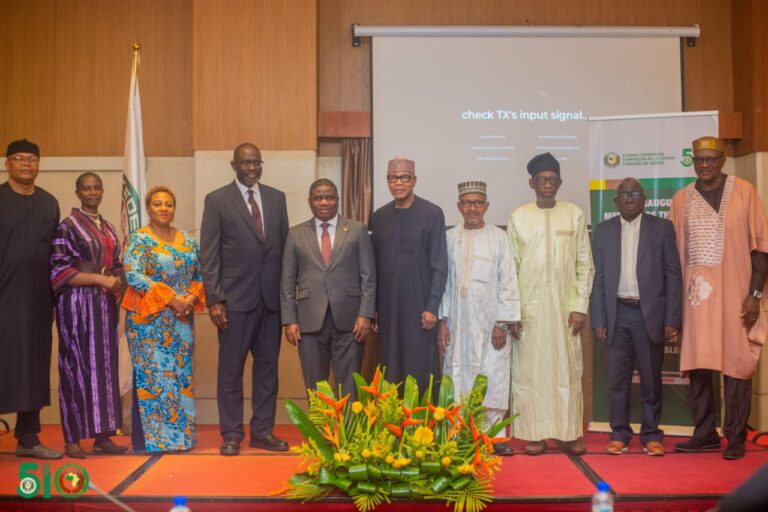
The document setting out the conclusions of this ‘‘strategic dialogue’’ was signed by the Vice-President of the ECOWAS Commission, Anthony Oluwatosin Ogunjimi, and the Head of the West Africa II Division at the German Federal Ministry for Economic Cooperation and Development, Ms Karen Pfundt, in the presence of, amongst others, the German Ambassador to Nigeria and ECOWAS, Stefan Rossel, representatives of GIZ, the German Agency for International Cooperation, and the ECOWAS Commission.
Discover how ECOWAS is transforming communities, economies and the lives of West African citizens — one story at a time.