Initializing...
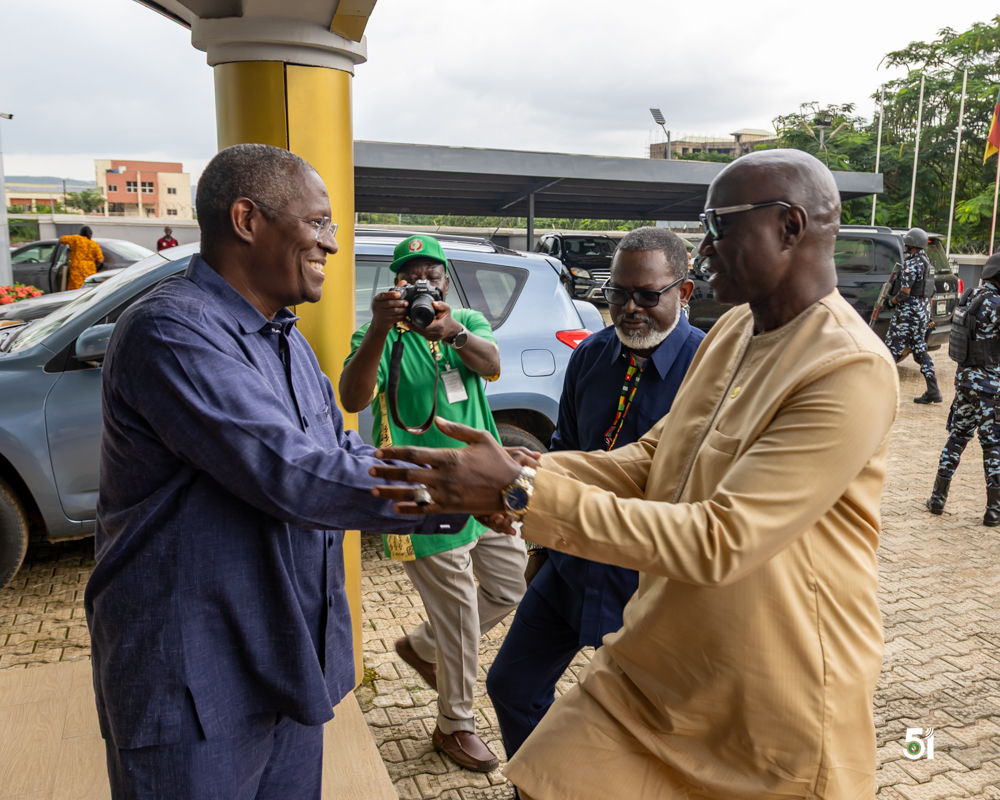
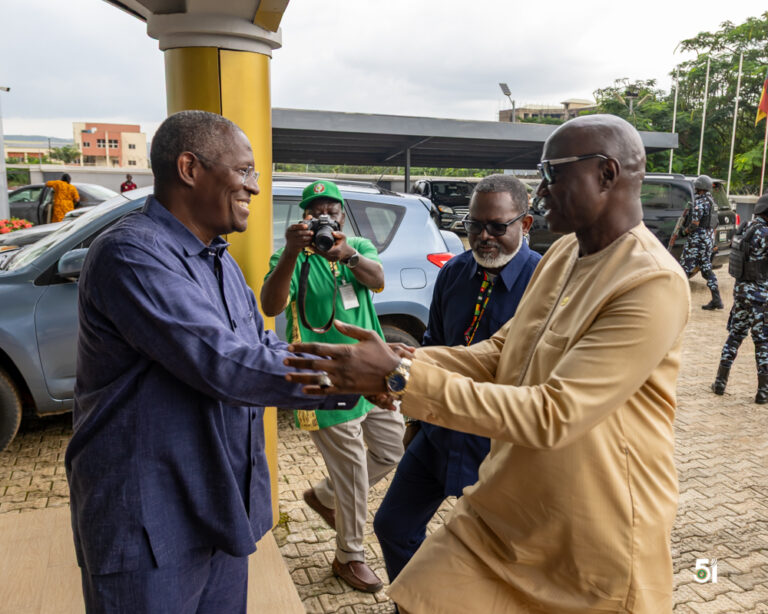
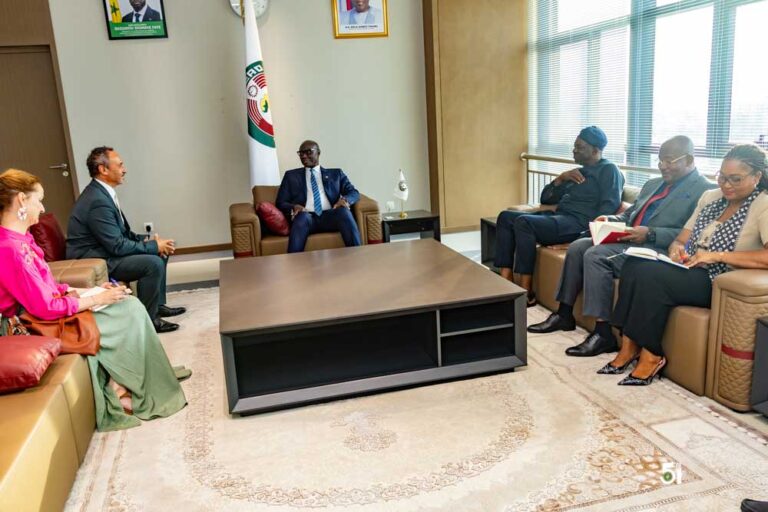
The President of the ECOWAS Commission, H.E. General Birame Diop, and the President of the ECOWAS Community Court of Justice, Hon. Justice Ricardo Cláudio Monteiro Gonçalves, have reaffirmed their commitment to strengthening cooperation among ECOWAS institutions, promoting the rule of law and advancing regional integration during the Commission President’s official visit to the Court in Abuja. The meeting underscored a shared determination to reinforce institutional effectiveness, democratic governance and citizen-centred development as key pillars of the ECOWAS Vision 2050.
Addressing members of the Court and the Commission delegation, H.E. General Birame Diop emphasized that ECOWAS stands at a critical juncture in its history and must collectively respond to the challenges facing the region across the areas of integration, peace and security, governance, democracy and sustainable development. He stressed that strong institutions remain indispensable to the success of the regional project and called for closer collaboration among the Community’s principal organs while preserving their respective mandates and independence.
The President of the Commission further highlighted the importance of maintaining a healthy balance between the executive, judicial and legislative institutions of ECOWAS. Drawing a parallel with the governance structures of modern states, he noted that effective regional governance depends on institutions that are independent, credible and capable, while working together in pursuit of a common objective: the prosperity, stability and well-being of the peoples of West Africa.
In his remarks, Hon. Justice Ricardo Cláudio Monteiro Gonçalves welcomed the Commission President to the Court and expressed confidence that the new leadership of the Commission would provide renewed momentum to the Community and its institutions. He underscored the importance of solidarity, fraternity and mutual support among ECOWAS institutions, noting that a stronger Community can only be built through closer cooperation and a shared commitment to serving the citizens of the region.
The President of the Court also reaffirmed the judiciary’s readiness to contribute to the realization of the Community’s objectives and praised the Commission President’s distinguished international experience and leadership credentials. He expressed optimism that the new mandate would further strengthen the foundations of regional integration and enhance the effectiveness of ECOWAS in addressing the expectations of its Member States and citizens.
The discussions highlighted a strong convergence of views on the central role of the rule of law, institutional dialogue and mutual respect in advancing the ECOWAS integration agenda. Both leaders emphasized that independent institutions are not instruments of competition but partners in a common endeavour to build a more peaceful, democratic, prosperous and resilient West Africa.
The visit further provided an opportunity for both institutions to reaffirm their commitment to deeper engagement, stronger coordination and continuous dialogue in support of the Community’s strategic priorities. It also reflected a shared understanding that the success of ECOWAS depends not only on the strength of its institutions but also on their ability to work collectively in delivering tangible benefits to the citizens they serve.
Discover how ECOWAS is transforming communities, economies and the lives of West African citizens — one story at a time.